The Chronic Kidney Disease Crisis in Raichur
Based on authentic epidemiological surveys conducted among CKD patients in Raichur District. Highlighting the devastating medical and financial impact on rural families.
A clinical study of 100 CKD patients in Raichur revealed that 36% presented directly in Stage V (ESRD) requiring immediate maintenance haemodialysis, and 11.8% in Stage IV.
Patients are predominantly male (approx. 68%). The primary drivers are untreated hypertension (28%) and diabetes mellitus (25%), striking farmers in their prime earning years (51–60 age group).
Nearly half (48.78%) of dialysis patients require life-sustaining haemodialysis three times per week, with 40% maintaining dialysis routines continuously for 1 to 3+ years.
Over 90% of households face severe financial ruin from commercial dialysis bills (78.5% of costs). Nearly 77% resort to selling ancestral farmland or taking high-interest loans.
Specialist Nephrology & Ultra-Pure RO Water
To shield rural families from financial devastation, M.K. Bhandari Hospital operates our Dialysis Centre on a strict charitable cost-to-cost basis—the lowest rates in the entire district.
- ✓ Nephrologist Supervision: Led by Dr. Raghukanth Reddy (MBBS, MD, DM Nephrology).
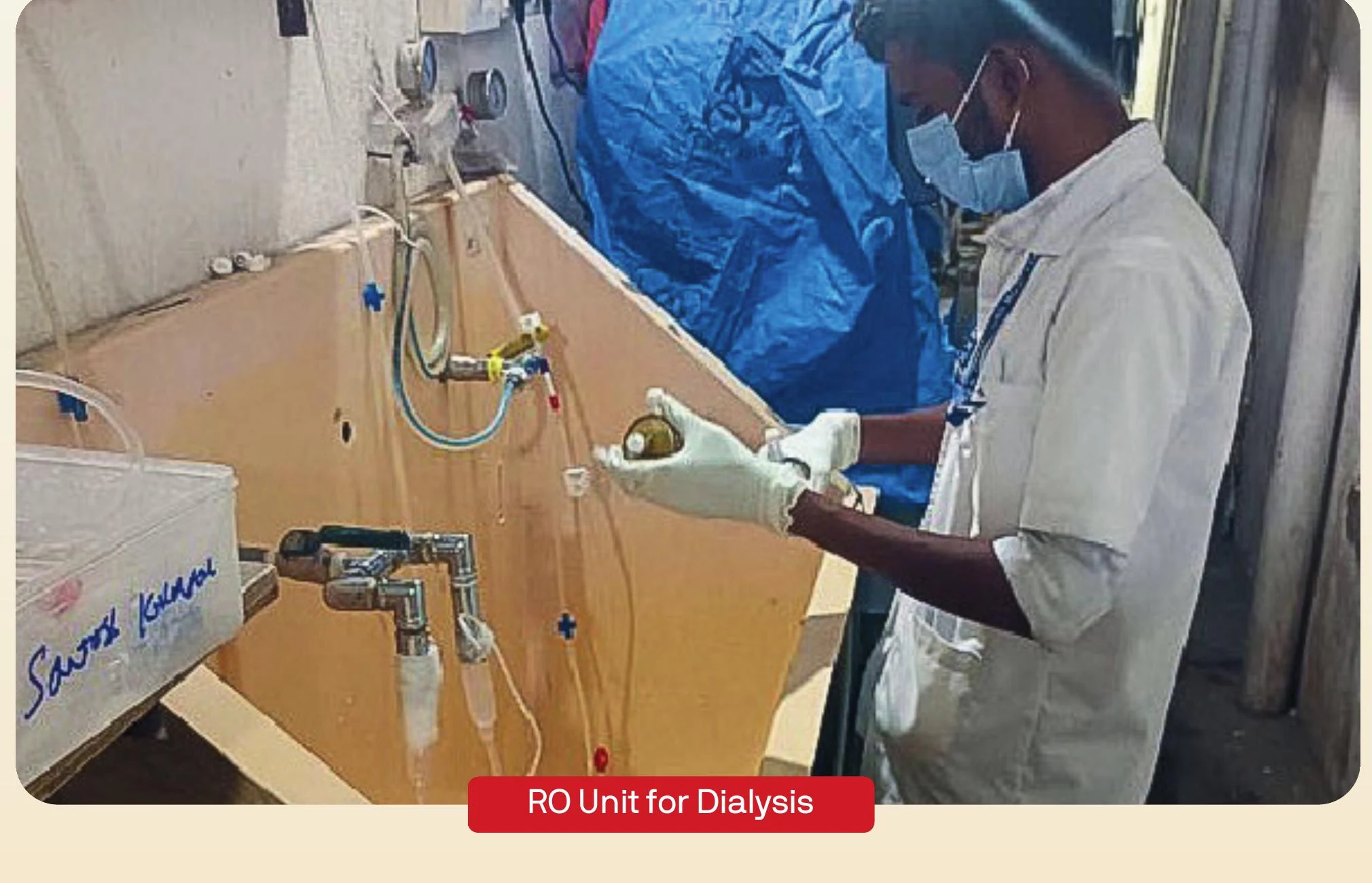
- ✓ Advanced Water Purification: Specialized multi-stage Reverse Osmosis (RO) water plant ensuring endotoxin-free water meeting international AAMI standards.
- ✓ Infection Control Protocols: Dedicated isolated machines for seropositive patients to eliminate cross-transmission.
- ✓ 24/7 ICU & Emergency Backup: Immediate multi-specialty intervention for acute uremic crises, hyperkalemia, or fluid overload.
Living with Hope & Dignity on Maintenance Dialysis
Authentic beneficiary journeys documented in RKB Foundation's official hospital records.
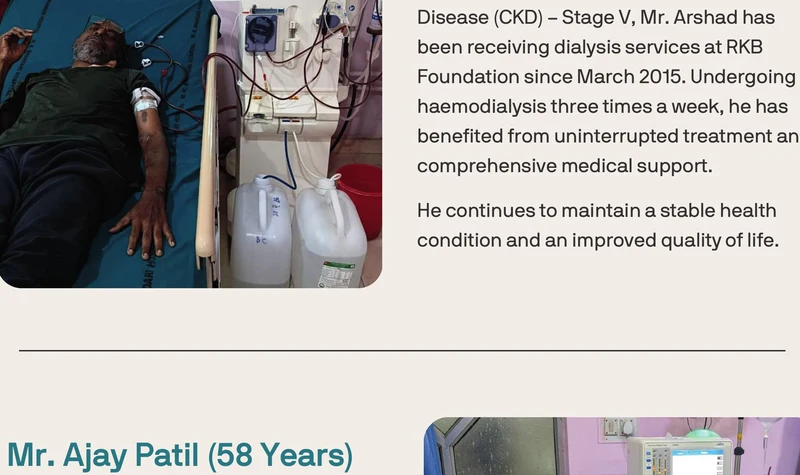
Mr. M. M. Arshad
47 Years Old · CKD Stage VDiagnosed with Hypertensive Chronic Kidney Disease (CKD) – Stage V, Mr. Arshad has been receiving dialysis services at RKB Foundation since March 2015. Undergoing haemodialysis three times a week, he has benefited from uninterrupted treatment, specialist medical support, and subsidized medications.
Mr. Ajay Patil
58 Years Old · CKD Stage VMr. Ajay Patil joined the Foundation’s dialysis programme in December 2015 following a diagnosis of Hypertensive Chronic Kidney Disease (CKD) – Stage V. With regular haemodialysis and ongoing nephrology supervision, he has effectively managed his condition without catastrophic financial ruin.
Renuka
12 Years Old · Pediatric CKDRenuka, a young 12-year-old schoolgirl, developed severe renal complications requiring acute and ongoing maintenance dialysis. Through RKB Foundation’s subsidized program, she receives regular pediatric haemodialysis, comprehensive supportive medications, and careful growth monitoring.
Urgent Appeal for 06 Dialysis Machines Under CSR
With hundreds of rural CKD patients on waitlists across Raichur, Manvi, Sindhanur, and Devadurga, RKB Foundation formally requests corporate organizations, public sector undertakings, and philanthropic foundations to sponsor 6 Dialysis Machines under Corporate Social Responsibility (CSR). Every additional machine provides over 1,500 life-saving sessions annually.
Dialysis Program FAQs
Helpful answers for patients, attenders, and referring physicians.
What are the dialysis session timings at M.K. Bhandari Hospital? +
The dialysis centre operates six days a week across multiple morning, afternoon, and evening shifts. Emergency 24/7 dialysis is always on standby for acute pulmonary edema, hyperkalemia, or sudden uremic decompensation via our Casualty & ICU teams.
How does the cost-to-cost subsidized pricing work? +
RKB Foundation absorbs the capital cost of machines, building infrastructure, electricity, and water purification. Patients are only charged strictly for dialyzers, tubing lines, and consumables on a cost-to-cost basis, making it the most affordable dialysis service in Raichur.
Do you have isolated machines for Hepatitis B / C patients? +
Yes. In strict compliance with international nephrology infection control protocols, we maintain dedicated, physically segregated dialysis machines and separate plumbing lines for seropositive patients to prevent any cross-contamination.